


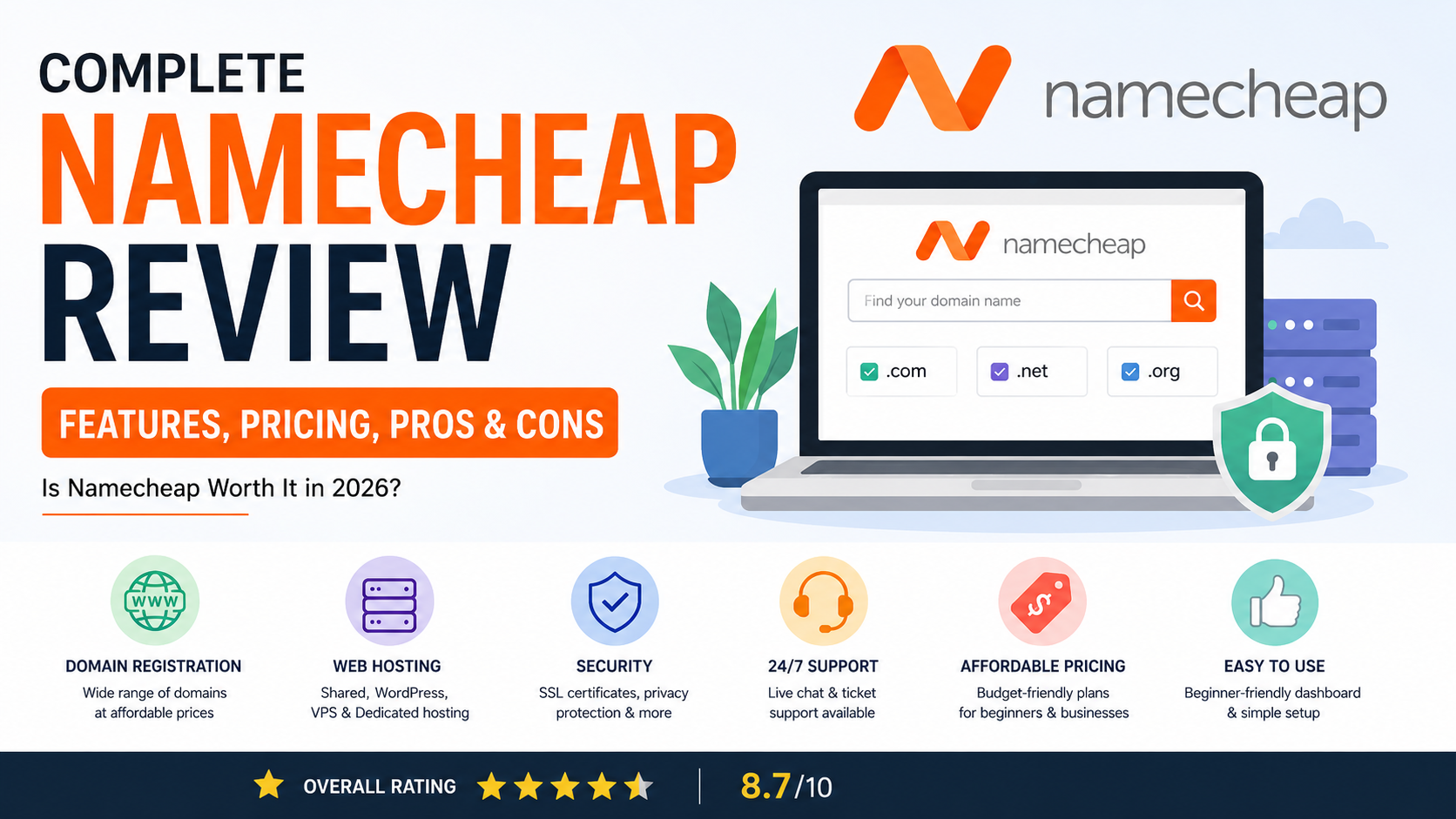
If you are planning to create a website, start a blog, launch an online business, or simply buy a domain name, you have probably heard of Namecheap. It is one of the most recognized domain registrars and hosting providers in the world. Over the years, Namecheap has built a strong reputation among beginners, bloggers, freelancers, developers, and small businesses because of its affordable pricing and easy-to-use services. Namecheap manages millions of domains globally and continues expanding its hosting and online tools ecosystem.
But an important question remains:
Is Namecheap still worth using in 2026, or are there better alternatives available?
In this detailed review, we will cover everything you need to know, including features, pricing, performance, customer support, advantages, disadvantages, and whether Namecheap is the right choice for your website.
What is Namecheap?
Namecheap is a domain registrar and web hosting company founded in 2000 by Richard Kirkendall. Initially, it focused mainly on domain registration services, but over time it expanded into various products and services such as:
- Domain registration
- Shared hosting
- WordPress hosting
- VPS hosting
- Dedicated servers
- SSL certificates
- Email hosting
- VPN services
- Website builder tools
- CDN services
Today the company manages millions of domains worldwide and serves users across many countries.
Namecheap Services Overview
1. Domain Registration
Namecheap became popular mainly because of its domain registration service.
The platform supports a huge range of domain extensions, including:
- .com
- .net
- .org
- .ai
- .shop
- .co
- .info
- .xyz
- hundreds of other TLDs
One of the biggest advantages is its simple domain search system. Users can quickly search available domains and buy them without complicated steps.
Domain Features
- Free Whois privacy protection on many domains
- Domain transfer service
- DNS management
- Domain security tools
- Auto-renew options
Many users appreciate Namecheap because privacy protection is often included at no additional cost.
2. Web Hosting Services
Namecheap offers several hosting solutions designed for different types of users.
Shared Hosting
Shared hosting is suitable for:
- Small websites
- Personal blogs
- Beginner websites
- Startup businesses
Features usually include:
- SSD storage
- Free website migration
- cPanel access
- Website builder tools
- Email accounts
Shared hosting remains one of the most affordable services offered by Namecheap.
EasyWP Managed WordPress Hosting
EasyWP is Namecheap’s managed WordPress hosting solution.
Features include:
- Fast WordPress setup
- Automatic backups
- Dashboard management
- Better WordPress optimization
For users who don’t want technical complications, EasyWP simplifies website management significantly.
VPS Hosting
Virtual Private Servers provide:
- Dedicated resources
- Better performance
- More control
- Root access
VPS hosting is generally suitable for:
- Growing businesses
- High traffic websites
- Developers
Dedicated Servers
Dedicated hosting offers:
- Maximum performance
- Complete server control
- High security
- Larger resource allocation
Dedicated servers work best for:
- Large businesses
- Enterprise websites
- High traffic applications
User Interface and Ease of Use
One of Namecheap’s strongest areas is its user experience.
The dashboard looks clean and organized. Even beginners can understand:
- Domain settings
- Hosting management
- Billing
- Security tools
- DNS controls
Unlike some competitors that overwhelm users with technical settings, Namecheap keeps things relatively simple.
Users can install WordPress in just a few clicks using Softaculous and cPanel integration.
Performance Review
Performance matters because website speed affects:
- User experience
- SEO rankings
- Conversion rates
Namecheap performs reasonably well for basic websites and blogs.
Speed
For small and medium websites:
Advantages:
- SSD-based hosting
- CDN options
- Stable performance
Limitations:
- Shared hosting can become slower during traffic spikes
- Performance-focused competitors may deliver faster speeds
Recent testing indicates Namecheap provides good value, though speed-focused providers can outperform it.
Uptime
Namecheap generally promises strong uptime levels.
A website going offline can hurt:
- Traffic
- Sales
- User trust
Most users report stable availability and dependable uptime experiences.
Security Features
Security is essential for every website owner.
Namecheap includes various security features such as:
SSL Certificates
SSL helps:
- Encrypt visitor data
- Improve trust
- Boost SEO rankings
Domain Privacy
Whois protection hides personal information from public databases.
Two-Factor Authentication
This adds an additional layer of account protection.
DDoS Protection
Some plans include protection against attacks and malicious traffic.
Namecheap Customer Support Review
Customer support is available through:
- Live chat
- Ticket system
- Knowledge base
- Tutorials
The company provides 24/7 support services.
Support Strengths
- Fast live chat response
- Helpful tutorials
- Easy documentation
Support Weaknesses
- No direct phone support
- Advanced issues can take longer
Some community discussions praise the support quality, while others report mixed experiences depending on issue complexity.
Pricing Review
Pricing is where Namecheap attracts many users.
Entry-level hosting often starts at relatively low promotional prices, making it appealing for beginners and small projects.
However, users should pay attention to:
- Renewal prices
- Additional services
- Optional add-ons
Low introductory pricing does not always remain identical after renewal periods.
Real User Experience and Community Feedback
Community opinion around Namecheap is mixed but generally positive.
Positive comments frequently mention:
- Easy domain management
- Affordable pricing
- Helpful support
- Beginner-friendly interface
Some users report:
“I’ve been using Namecheap for years and it’s been super reliable.”
However, some users also mention concerns such as:
- Renewal costs
- Hosting limitations
- Occasional pricing complaints
Others have discussed isolated negative experiences involving domains and support interactions.
As with any hosting provider, experiences vary depending on website type and user expectations.
Pros and Cons
Pros
✓ Affordable pricing
✓ Beginner-friendly dashboard
✓ Free domain privacy on many domains
✓ Large selection of TLDs
✓ Easy WordPress installation
✓ Multiple hosting options
✓ Good customer support availability
✓ Strong security tools
Cons
✗ Renewal pricing can be higher
✗ No phone support
✗ Shared hosting performance can vary
✗ Advanced users may want more server customization
✗ Premium features sometimes require extra purchases
Namecheap vs Competitors
Namecheap vs GoDaddy
Namecheap usually wins for:
- Lower costs
- Free privacy protection
- Simpler interface
GoDaddy often wins for:
- Larger ecosystem
- Marketing tools
Namecheap vs Hostinger
Namecheap wins for:
- Domain management
- Privacy features
Hostinger often wins for:
- Faster hosting performance
- Website speed
Namecheap vs Cloudflare Domains
Cloudflare often wins for:
- Transparent domain pricing
- Security ecosystem
Namecheap wins for:
- More beginner tools
- Broader hosting options
Who Should Use Namecheap?
Namecheap works especially well for:
Bloggers
Affordable plans make it easy to start.
Freelancers
Easy website setup and domain management.
Small businesses
Low starting costs reduce initial investment.
Beginners
Simple interface helps users without technical knowledge.
Developers
VPS and dedicated hosting options provide more control.
Who Should Avoid Namecheap?
Namecheap may not be ideal for:
- Large enterprise websites
- Very high traffic websites
- Businesses requiring premium speed optimization
- Users needing extensive custom server environments
Final Verdict: Is Namecheap Worth It in 2026?
Namecheap remains one of the strongest budget-friendly choices in the website and domain industry. It offers an attractive balance of affordability, usability, and essential features. The platform is especially useful for beginners, bloggers, and small businesses that need a reliable way to launch websites without spending a large budget.
Its biggest strengths are domain management, affordable pricing, privacy features, and ease of use. The main drawbacks are performance limitations on lower-tier hosting plans and higher renewal pricing on some services.
